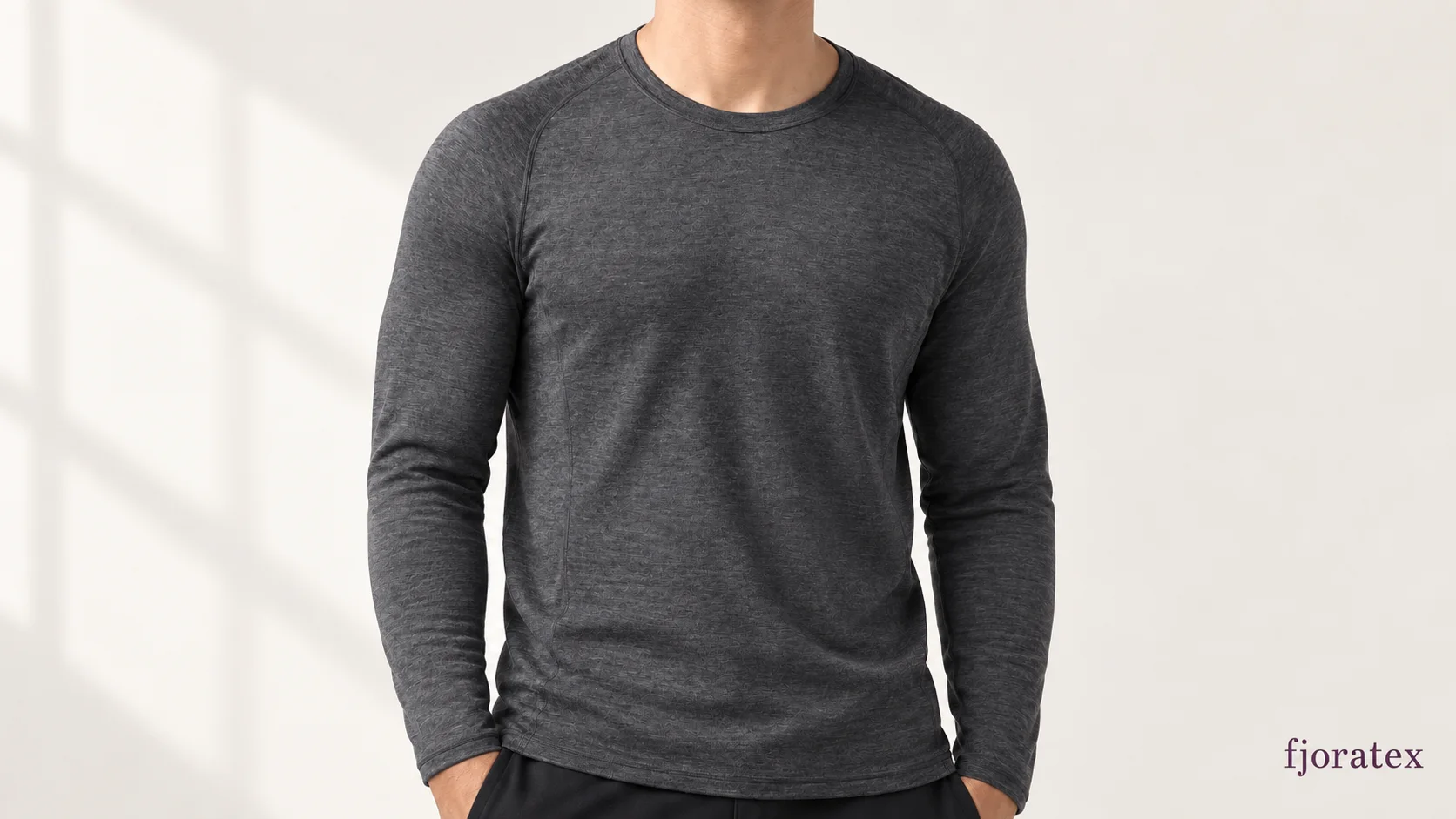
Based on a photograph of a real wool base layer, edited with AI.
A cool morning can include a brisk walk, a wait for a train and several hours indoors. The same base layer stays on through all of it, even as the wearer’s activity and surroundings change. Something that feels warm enough while standing still may feel too warm once the pace picks up.
For brands developing everyday tops, this is a useful starting point: define how the garment will be worn, then choose the fabric weight, construction and blend around that routine.
What does wool contribute when activity changes?
Wool fibres can absorb water vapour from their surroundings and release it as conditions change. This helps buffer changes in humidity in the small space between clothing and skin. Woolmark describes this moisture-buffering behaviour as one contributor to comfort during changing activity levels.
That makes wool worth considering for a layer worn through periods of movement and rest. Moisture absorption, however, is different from moving liquid sweat across a fabric or drying quickly. The blend, knit construction and other clothing layers still affect the finished garment’s behaviour.
Human wear trials also show why the fibre name cannot settle the whole choice. In a 2017 study of 21 adults exercising and recovering at 8°C, subjective thermal sensations were similar in the merino and polyester garment sets tested. Wool’s moisture-buffering mechanism is useful, but the comfort of a particular garment needs checking under its intended conditions.
Two wool-blend jerseys to consider
FJORATEX’s Lightweight & Next-to-Skin fabric library includes two single jerseys for base-layer and everyday top development:
| Fabric | Composition | Weight |
|---|---|---|
| Wool-Nylon Stretch Jersey | 81.8% wool, 12.2% nylon, 6% spandex | 170 gsm |
| Wool-Lyocell Stretch Jersey | 48% wool, 48% lyocell, 4% spandex | 180 gsm |
Both are listed for tees and long-sleeve base layers, with the wool/nylon jersey also listed for fitted layering tops. These are catalogue specifications and suggested development uses, rather than comparative wear-test results.
Both provide a concrete starting point for sampling. Their different wool contents and supporting fibres give a developer two compositions to examine against the same brief. The 10 gsm difference alone does not establish which will feel warmer, and the composition percentages do not establish drying speed or durability. Compare samples before assigning either fabric a role in the range.
For a closer look at construction choices, see our single jersey and interlock guide.
What should you check in a sample garment?
Start with the surface that will touch the skin. Handle both sides of the swatch, then assess a sample in the intended fit. Check the neckline, underarms and other seams during movement. A quick touch of the fabric cannot tell you how the assembled garment will feel after several hours.
Include both activity and rest in wear evaluation, using the other layers the wearer is likely to have on. Record where the garment feels damp, restrictive or irritating, and whether comfort changes after stopping. Follow with washing under the intended care instructions and reassess fit, surface appearance and hand feel. Our wool-blend testing guide covers how to turn those concerns into a testing brief.
For a wool-blend top in development, share the intended use, preferred composition and target weight, or bring a reference swatch. Contact FJORATEX to discuss which fabric directions to sample.
Next Step
Ready to develop your next fabric?
Share your brief and we'll respond within one business day to discuss technical fit, timing, and next steps.
Initiate a Project