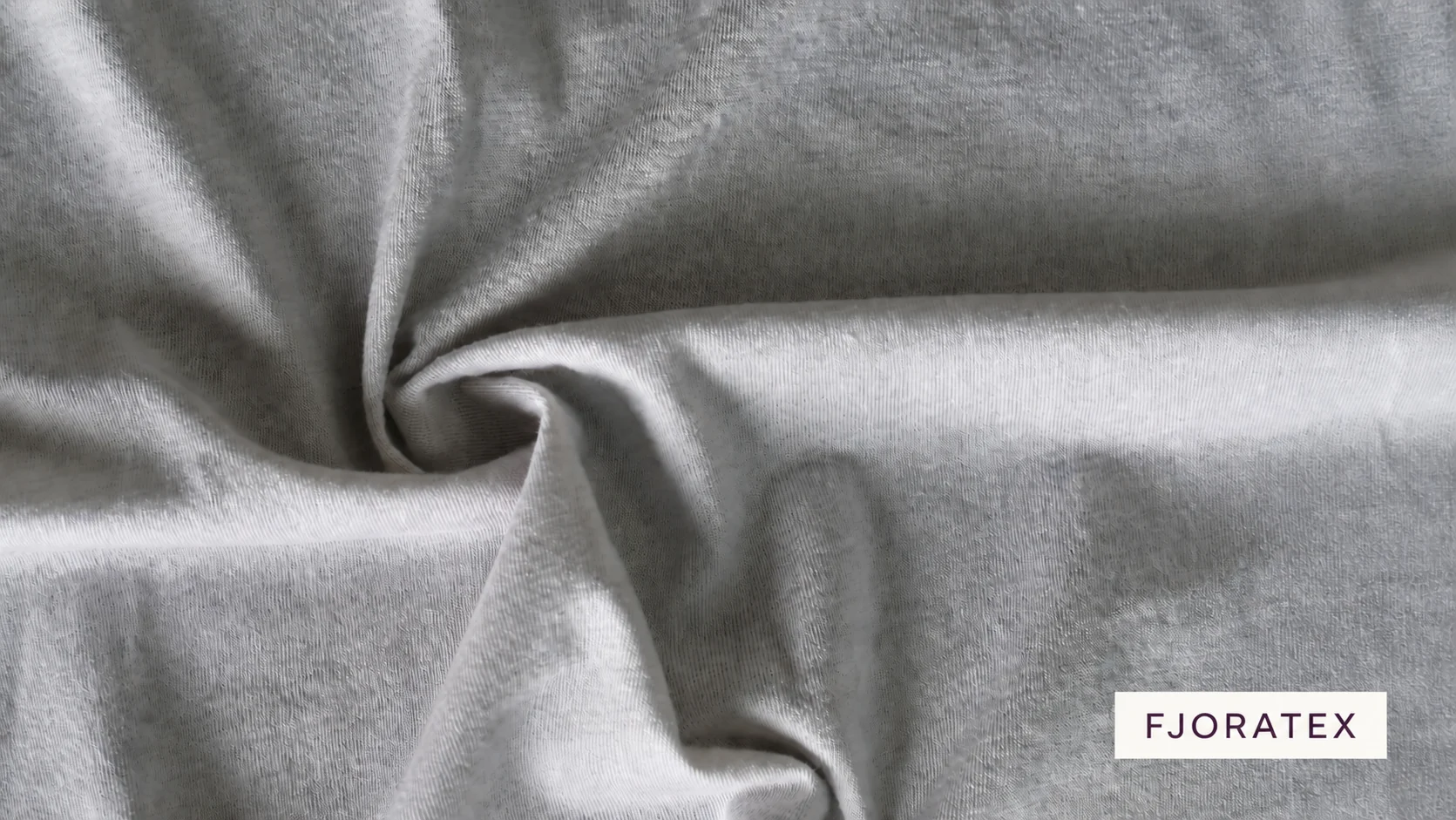
AI-assisted edit of an original FJORATEX wool-blend photograph. The pictured fabric is not verified as merino and is not a test result.
Test merino wool blend fabric against its intended care instructions and end use. Start with material identity, dimensional stability and wash appearance, then select pilling, strength, colourfastness and stretch tests for the garment's risks. Add moisture or odour testing when those claims need evidence. Blend percentages alone do not establish finished-fabric performance.
A lightweight base layer and a backpack-facing midlayer need different priorities. Copying a generic polyester activewear checklist can miss wool-specific wash behaviour while spending money on properties the product does not need.
What should you agree before testing?
Define the garment, fit and care instructions first. “Merino blend” does not tell a laboratory whether the finished product should survive hand washing, machine washing or tumble drying.
Confirm composition, fabric reference, construction, GSM, colour and finish. Where wool content or fibre fineness supports a product description, agree how it will be verified. Do not treat a supplier's written specification as a test result.
For certification projects, use the applicable Woolmark product specification. Its requirements belong to that scheme and product category, not every commercial merino order.
For the material-design context, see our guide to merino wool performance blends. Here, the question is whether the finished fabric delivers the intended result.
Why does washing deserve early attention?
Wool brings an additional risk beyond ordinary knit relaxation: felting. Woolmark explains that moisture, heat and mechanical action can cause wool fibres to interlock, producing irreversible shrinkage and a denser fabric. Its guidance also defines Superwash as shrink-resist treatment, not a property of all wool.
Ask the laboratory how the chosen programme will assess relaxation, felting-related change and the final washed result. A single percentage may not explain why a sample became smaller, thicker or less soft.
In an ISO-based programme, ISO 3759:2011 covers specimen preparation and measurement, ISO 6330:2021 supplies washing and drying procedures, and ISO 5077:2007 addresses dimensional change. Agree the complete combination and cycle count.
Check length and width separately, along with appearance and handle. If tumble drying will be allowed, flat-drying data is not enough. For garments, inspect collars, seams and trims too; acceptable fabric measurements do not automatically validate the assembled product.
Does adding nylon stop pilling or damage?
No blend label can answer that question. Nylon may be selected for durability, but the finished yarn, knit construction and finishing still need evaluation.
Woolmark's pilling guidance identifies fibre length, yarn twist and fabric cover as relevant design factors. This is why two merino/nylon fabrics with the same nominal ratio should not be assumed to perform alike.
For pilling, ISO 12945-1:2020 uses a pilling box; ISO 12945-2:2020 uses modified Martindale action. Compare like with like: method, prewashing, assessment stage and rating conditions. Ask for photographs when visual appearance is central to approval.
Which durability tests fit the garment?
This table is a starting point for discussion, not a mandatory test package.
| Product risk | Relevant evidence | What to clarify |
|---|---|---|
| Surface looking worn | Pilling under the agreed method | Prewash condition, assessment stage and photos |
| Repeated pack or equipment contact | ISO 12947-2:2016, abrasion breakdown | Whether the test addresses the intended contact risk |
| Lightweight knit under expansion | ISO 13938-2:2019, pneumatic bursting | Sample condition and any vulnerable garment panels |
| Fitted fabric staying stretched | ISO 20932-1:2018, elasticity | Applicable Amendment 1:2021, direction and unrecovered extension |
| Colour transferring during wear | ISO 105-X12:2016, rubbing; ISO 105-E04:2013, perspiration | Dry/wet conditions, shade selection and staining requirements |
These results are not interchangeable. High bursting strength does not prove abrasion resistance. Maximum extension does not show how well a fabric recovers. Perspiration colourfastness does not replace wet-rubbing assessment.
For dark next-to-skin garments or contrast panels, discuss colour-transfer risks early. For elastane blends, request recovery-related results, not just a statement that the fabric stretches.
Which performance claims need separate evidence?
“Moisture-wicking” and “quick-dry” describe different behaviours. AATCC TM195-2011e2(2017)e5 evaluates liquid moisture management; ISO 17617:2014 evaluates moisture drying. Wool's ability to take up moisture does not establish a particular drying result for a finished blend.
Odour and antibacterial claims also need separating. ISO 20743:2021 addresses antibacterial activity, while ISO 17299-1:2014 sets out general principles for deodorant-property testing. One does not automatically substantiate the other.
Agree the exact claim, relevant test, controls and sample condition. If a benefit is expected after repeated care, define the laundering programme before testing. Avoid carrying a result from new fabric into an unqualified wash-durability claim.
How can buyers control testing costs?
Start with applicable market, customer and contract requirements. Then allocate remaining effort to likely failures: incorrect material identity, unacceptable wash change, colour transfer and damage in the intended use. Add evidence for the claims that will actually appear in sales material.
Early, traceable screening can help compare candidates. At specification approval, agree which results require independent confirmation. Before bulk production, review whether changed colours, yarns or finishes affect the earlier evidence.
This is a negotiable sequence, not FJORATEX's fixed testing policy. Confirm sampling, acceptance criteria, first-test fees and retesting responsibilities in writing. Reducing duplicate work is useful; deleting an applicable requirement is not a budget strategy.
Frequently asked questions
Is every merino/nylon blend machine washable?
No. Verify the finished fabric and garment against the intended wash and drying instructions. A nylon percentage or a Superwash yarn description does not replace finished-product validation.
What pilling grade should a merino blend achieve?
Agree the grade with the buyer alongside the method, preparation and assessment stage. A grade without those details cannot establish acceptance or fairly compare suppliers.
Can wool's natural odour reputation support an antibacterial claim?
No. Antibacterial activity and odour performance are different claims. Use evidence matched to the actual wording and intended conditions, rather than treating a general fibre property as a finished-fabric result.
Build a brief around care, use and claims
FJORATEX is a knit fabric development and sourcing partner. For merino wool blend development, bring the garment use, care target and intended claims to the project discussion. Testing scope and commercial arrangements need individual agreement.
When the reports arrive, use our knit fabric test report guide to check methods, requirements and sample relevance.
Sources
Official public summaries and guidance, checked on 2 September 2026. Full methods and product-specific requirements remain necessary for laboratory commissioning.
- Woolmark: product specifications
- Woolmark: machine-washable wool
- Woolmark: pilling
- ISO 3759:2011: specimen preparation
- ISO 6330:2021: washing and drying
- ISO 5077:2007: dimensional change
- ISO 12945-1:2020: pilling box
- ISO 12945-2:2020: modified Martindale pilling
- ISO 12947-2:2016: abrasion breakdown
- ISO 13938-2:2019: pneumatic bursting
- ISO 20932-1:2018 and Amd 1:2021: elasticity
- ISO 105-X12:2016: rubbing colourfastness
- ISO 105-E04:2013: perspiration colourfastness
- AATCC TM195-2011e2(2017)e5: liquid moisture management
- ISO 17617:2014: drying rate
- ISO 20743:2021: antibacterial activity
- ISO 17299-1:2014: deodorant-property principles
Next Step
Ready to develop your next fabric?
Share your reference or requirements. We can discuss fabric options and how to take the project forward.
Get in touch