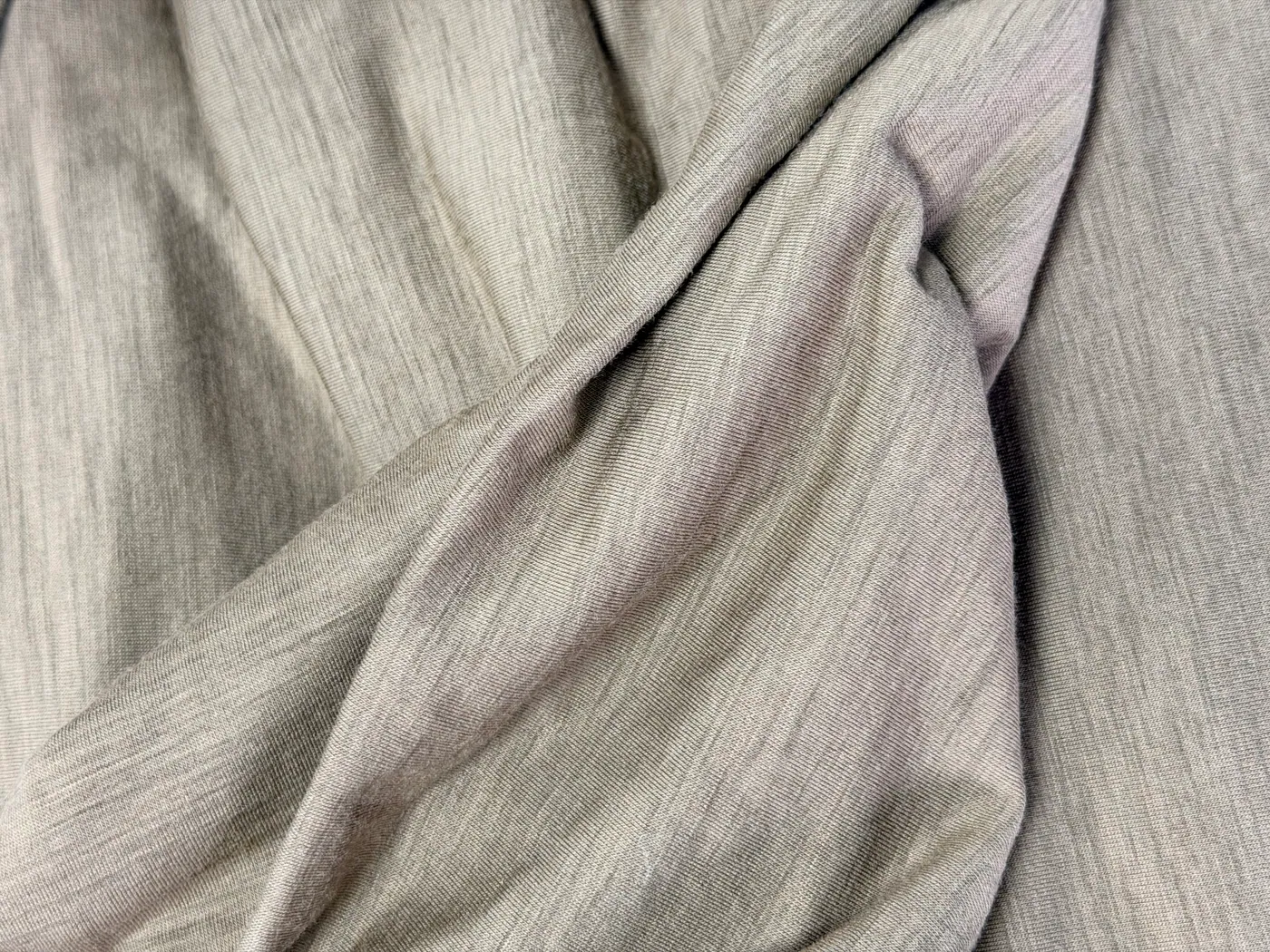
FJORATEX wool-nylon stretch jersey, 170 g/m². Original fabric photograph showing the knit surface and folds.
One wool jumper can make you pull at the collar; a lightweight wool base layer may feel comfortable against bare skin. Both labels say wool, but understanding the difference takes a closer look at the fibres and the surface they form.
Wool can feel itchy when fibre ends protruding from a fabric press against the skin and cause prickle. Fibre diameter is an important factor, alongside the exposed length of those ends and the fabric structure. For next-to-skin use, start with fibre specifications, then assess finished fabrics and sample garments. Research on fabric-evoked prickle; research on fibre diameter and protruding length.
Highlights
- Check fibre diameter early. Wool content and the word “merino” do not tell you how fine the fibres are.
- Similar averages can hide meaningful differences. Fibre diameter distribution and the way fibre ends protrude from the fabric still matter.
- Assess fibre, fabric and garment in stages. Use specifications to screen options, finished swatches to compare surfaces, and sample garments to check comfort in wear.
What causes wool fabric to prickle?
Some fibre ends extend beyond the surface of a wool fabric. When they touch the skin, some bend readily, while others resist bending enough to exert a force that produces a prickling sensation.
Research published by Garnsworthy and colleagues in 1988 linked fabric-evoked prickle to these protruding fibre ends and the forces they exert. How fibre ends contact the skin matters. Wool percentage describes composition, but it does not describe fibre diameter or the condition of the fabric surface. Study abstract
A “pure wool” or “wool blend” label therefore gives too little information to judge which fabric will feel more comfortable against the skin.
Is merino wool itchy?
Fine merino wool can feel comfortable next to skin because its fibres bend readily. When other conditions are comparable, finer fibres are more flexible, helping to reduce prickle. Woolmark also links merino's fine fibres with its soft feel. Why merino wool feels soft
Fibre diameter is measured in microns, written as μm. One micron equals 0.001 millimetres. The mean fibre diameter commonly shown in wool specifications is worth checking early when selecting material for direct skin contact.
A 2018 study analysed 177 commercial knitted wool garments and assessed their prickle propensity using the Wool ComfortMeter. Within that sample set, mean fibre diameter had the strongest effect on the prickle assessment. This gives a practical reason to take fineness seriously. Study abstract
Merino wool comes in a range of fibre diameters, however. The merino name identifies the wool type; the micron specification gives more detail about its fineness. Selecting fine wool is a useful starting point, followed by checking the fabric made from it. Woolmark's guide to wool fibre diameter
Why compare fabrics with similar micron specifications?
An average fibre diameter describes neither the full spread of fibre diameters nor how the fibres sit at the finished fabric surface.
First, a mean value does not describe every fibre in the batch. Two batches with similar averages can have different diameter distributions. The 2018 garment study also found an interaction between variation in fibre diameter and fabric thickness, showing why the average alone leaves out part of the picture. Study abstract
Once fibres have been spun and knitted, the exposed length of each protruding end and the way it is held also matter. In a paper published in the 2015 volume of the Textile Research Journal, Naebe and colleagues used mechanical calculations to investigate this relationship. Their calculations suggested that even very fine fibres could produce a prickle-inducing force if their free protruding length was short enough. Study abstract
Fibre specifications help select the raw material; fabric samples show the surface produced from it. These are two different stages of evaluation.
How should buyers assess wool fabric for next-to-skin use?
For a long-sleeve base layer worn directly against the skin, a practical evaluation can follow three stages:
When selecting fibres, confirm the fineness specification. Check mean fibre diameter as well as composition. Where data is available, examine the diameter distribution too. Use this information to shortlist materials worth sampling.
When comparing fabrics, use swatches that have completed the intended dyeing and finishing. For a dyed product, compare fabrics after those processes, rather than judging only from yarn samples or unfinished cloth. Record the yarn, knit construction and finishing used for each swatch, and assess the face that will sit against the skin.
When evaluating the product, wear-test sample garments. Use the intended fit and way of wearing the garment. Record whether prickling occurs, where it occurs and when it begins, then reassess after washing according to the proposed care instructions. Record seam rubbing and tightness separately from prickle to help investigate the source of discomfort.
If laboratory assessment is needed, specify whether the concern is prickle propensity or another aspect of fabric handle, then confirm the method and test conditions. Our guide to reading a knit fabric test report explains how to check those details. Our article on everyday wool-blend base layers looks more closely at the garment's intended use.
FJORATEX is a knit fabric development and sourcing partner. For a next-to-skin wool project, bring a reference fabric you are happy with, along with your target weight, preferred composition and intended use, to discuss sampling options. Use the reference as a basis for comparison, then make sample garments from the shortlisted fabrics to assess prickle during actual wear.
Next Step
Ready to develop your next fabric?
Share your reference or requirements. We can discuss fabric options and how to take the project forward.
Get in touch