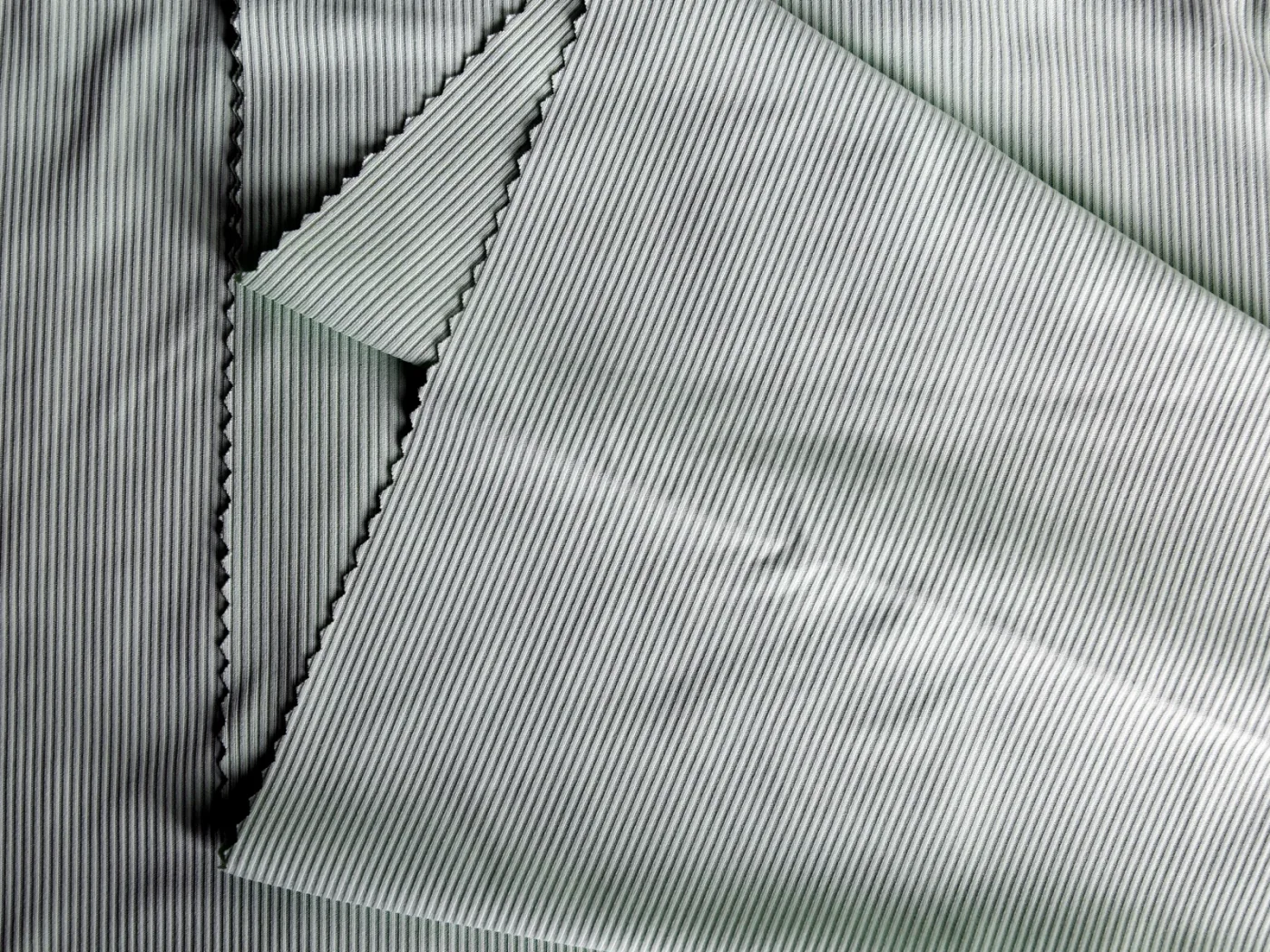
Original photograph of FJORATEX nylon-spandex rib knit, showing the fabric surface and overlapping swatches.
Some summer clothes feel cool the moment you touch them. After you've worn them for a while, especially once you start to sweat, that initial freshness may be much less noticeable. Why does the feeling change?
Fabric feels cool to the touch when it draws heat from warmer skin. Faster heat transfer at first contact usually creates a stronger cooling sensation. Comfort during continued wear also depends on how heat escapes to the surroundings and how sweat moves and evaporates.
Highlights
- Materials at the same temperature can feel different. The rate at which they draw heat from your skin affects the sensation.
- qmax measures peak heat flux at initial contact. When comparing values, check the test method, temperature difference and tested surface.
- For summer fabrics, consider both the first touch and comfort over time. Sweat evaporation and garment construction also shape how clothing feels during activity.
Does fabric feel cool because its temperature is lower?
Not necessarily. Metal and wood kept in the same room can be at the same temperature, yet the metal usually feels colder because it draws heat from your skin more quickly.
The same principle helps explain contact cooling in fabrics. When skin is warmer than the fabric, the rate of heat transfer at first contact affects how cool the fabric feels. KATO TECH's explanation of contact cooling
Why can the cooling sensation fade during wear?
The heat-transfer process helps explain the change: as the fabric warms where it touches your skin, the temperature difference narrows and the initial cool feeling may become less noticeable.
Meanwhile, your body continues to produce heat. During wear, heat loss and sweat evaporation both affect how cool you feel. Garment fit and surrounding conditions influence these processes. Damp fabric clinging to your skin also affects comfort. Hohenstein's approach to clothing comfort
For more on how evaporating sweat contributes to cooling, see our article on evaporative cooling and fabric selection.
What does qmax measure in a fabric test report?
qmax is the peak rate of heat transfer per unit area at initial contact, commonly expressed in W/cm².
KAKEN describes the JIS L 1927 test as follows: the specimen is brought to room temperature, then placed in contact with a heated plate 10°C above room temperature. The peak heat flux during initial contact is recorded. Under the same test conditions, a higher qmax indicates a stronger cooling sensation on contact. KAKEN's test method guide
The KES method described by KAKEN also allows a temperature difference of 20°C. When comparing qmax values, use the same method and temperature difference, and check that the tested surface is the one intended to touch the skin.
How should you compare fabrics for summer clothing?
Of course, feeling cool when you first put something on is a benefit in itself. When selecting fabrics, note that initial sensation separately from comfort during longer wear.
| What you want to improve | What to assess |
|---|---|
| A cooler feel on first contact | The feel of the surface intended to touch the skin, plus qmax measured under matching conditions |
| Less heat and stuffiness during wear | Thermal resistance, water-vapour resistance, garment fit and the intended environment |
| Less wet cling after sweating | Sweat transport, evaporation and how strongly damp fabric clings to skin |
Thermal resistance and water-vapour resistance describe how much a material resists the passage of heat and water vapour, respectively. ISO 11092:2026 measures these under steady-state conditions.
Start by comparing samples under consistent temperature and moisture conditions. Use the side intended for skin contact, and touch each sample in the same way. Once you've narrowed down the candidates, try them in garments made to the intended design. Record how they feel when first put on, after a period of wear and after you've been active enough to sweat. Our guide to reading a knit fabric test report covers what to check in the supporting results.
When discussing summer knit fabric development with FJORATEX, describe the intended use as well as the feel you want: “A fabric for summer commuting that feels cool when first put on and less clingy after walking and sweating.”
Next Step
Ready to develop your next fabric?
Share your reference or requirements. We can discuss fabric options and how to take the project forward.
Get in touch