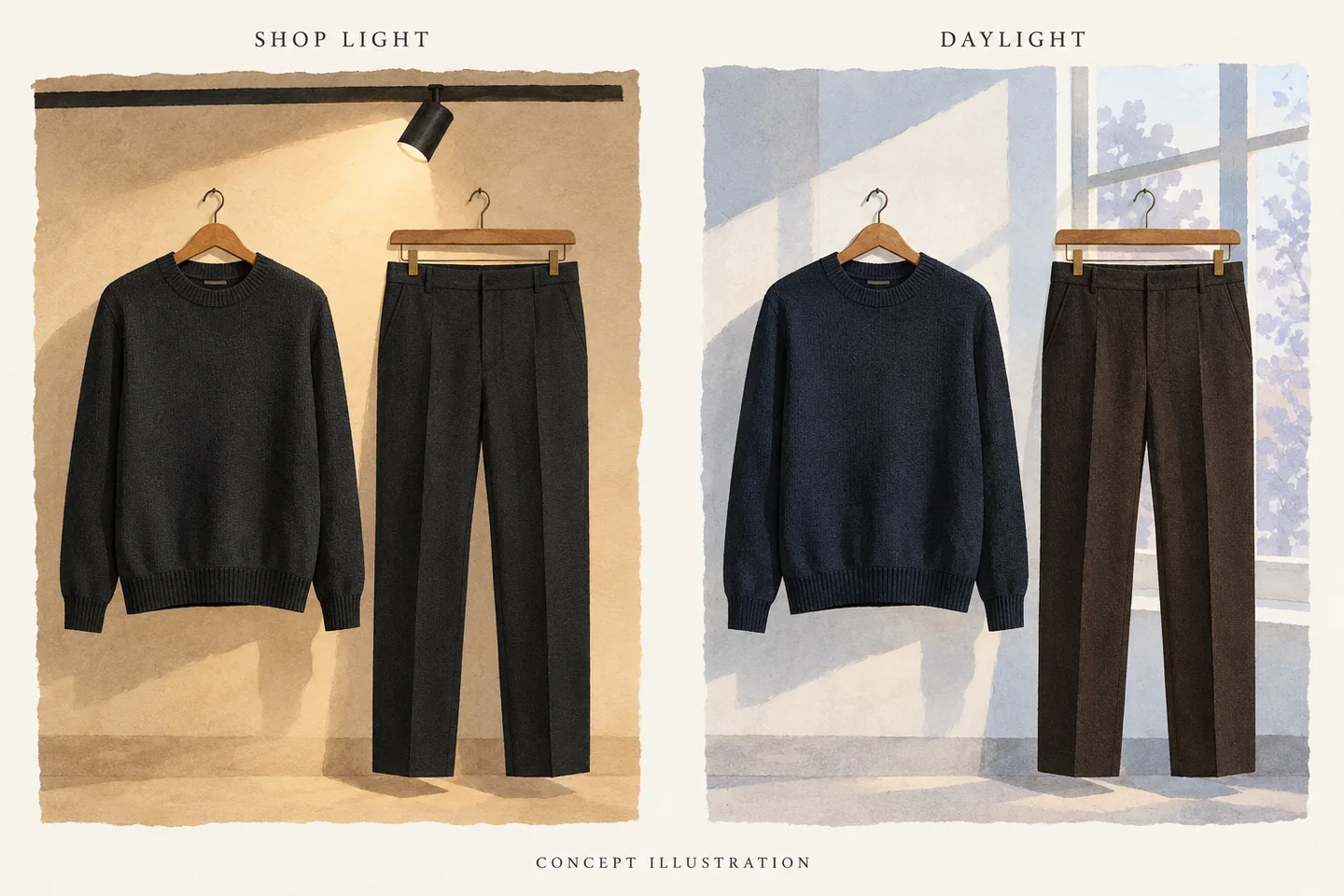
AI-generated concept illustration showing how a change in lighting can reveal a mismatch between dark garments.
A black top and a pair of black trousers look right together in the shop. Then you get home, or step into daylight, and the top looks slightly blue while the trousers have a brownish cast.
Fabric metamerism occurs when two fabrics appear to match under one light source but look different under another. The fabrics reflect wavelengths of light differently, and a change in lighting can make those differences visible. This can affect separate garments as well as components within the same garment. Datacolor: Light Sources and Colour Evaluation
Highlights
- Two fabrics can look equally black while reflecting light differently. A change in lighting may reveal a difference in undertone.
- Check the main fabric, ribbing and thread together. The materials need to work as a combination in the finished garment.
- Agree on the lighting before approving a colour. Include conditions relevant to where the garment will be sold and worn.
What makes two black fabrics respond differently to light?
Different dye combinations can produce a similar-looking black while reflecting light differently. A fabric's spectral reflectance curve describes how much light it reflects at each wavelength.
Two fabrics with different curves can still look alike under a particular light source. Change the mix of wavelengths illuminating them, and the light reflected towards your eyes changes too. The match may then become less convincing. Konica Minolta: Lighting and Metamerism
Can this happen between the collar and body of a garment?
Yes. A garment may combine a main fabric, ribbing, sewing thread and zip tape, each using different materials or dye formulations. They still need to look coordinated when assembled.
Sewing-thread manufacturer AMANN identifies matching thread to fabric as a common situation in which metamerism matters. Check the materials that will actually sit next to each other. Once the main fabric is selected, place the proposed ribbing, thread and zip tape alongside it and compare the combination under the agreed light sources. AMANN: Metamerism in Textiles
Is checking the colour in daylight enough?
Daylight is a useful starting point. A garment may also need to look coordinated under shop lighting, office lighting or the lights at home.
For development, agree on a daylight reference such as D65, together with additional lighting conditions relevant to the intended use or the customer's requirements. Establish these before the first lab dips are assessed.
“White light” is not a precise colour-assessment condition. Two lamps with similar colour temperatures can have different spectral power distributions, so they may render the same fabrics differently. Naming the light source makes the comparison more repeatable than simply recording “indoor lighting”. Datacolor: Colour Temperature and Spectral Distribution
How can you catch a mismatch before colour approval?
Place the physical standard and candidate fabric side by side against a neutral grey background. Keep sample orientation and viewing angle consistent, then switch between the agreed light sources. Repeat with the intended garment components. Look for a combination that remains coordinated across those conditions. AMANN: Practical Colour-Assessment Guidance
A short record makes the decision easier to revisit:
| What you compare | What to record |
|---|---|
| Physical standard and lab dip | Sample version, light sources and result under each source |
| Main fabric, ribbing, thread and zip tape | Intended combination, where a mismatch appears and under which light |
| Instrumental colour measurements | Illuminants, observer conditions and colour-difference formula |
If a report includes a metamerism index, keep its comparison conditions and calculation formula with the result. CIE's definition explicitly requires the colour-difference formula to be stated. CIE: Metamerism Index
These records can follow the sample through the yarn-to-fabric colour approval process. For help placing measurement results in context, see our guide to reading a knit fabric test report.
When discussing a development with FJORATEX, share the physical colour standard, the components it needs to match and the relevant lighting conditions. That gives the colour discussion a clear starting point.
Next Step
Ready to develop your next fabric?
Share your reference or requirements. We can discuss fabric options and how to take the project forward.
Get in touch