Key Takeaways
- Wet cling is the sticky, dragging friction between a sweaty fabric and skin. It can feel uncomfortable and, in some cases, contribute to chafing.
- In lab testing, thin single-knit polyester that wicks and dries fast clung the least. Thicker double-knit polyester also performed well because it absorbs moisture away from the skin surface.
- Cotton knits clung more than polyester of similar thickness, since cotton holds moisture at the interface for longer.
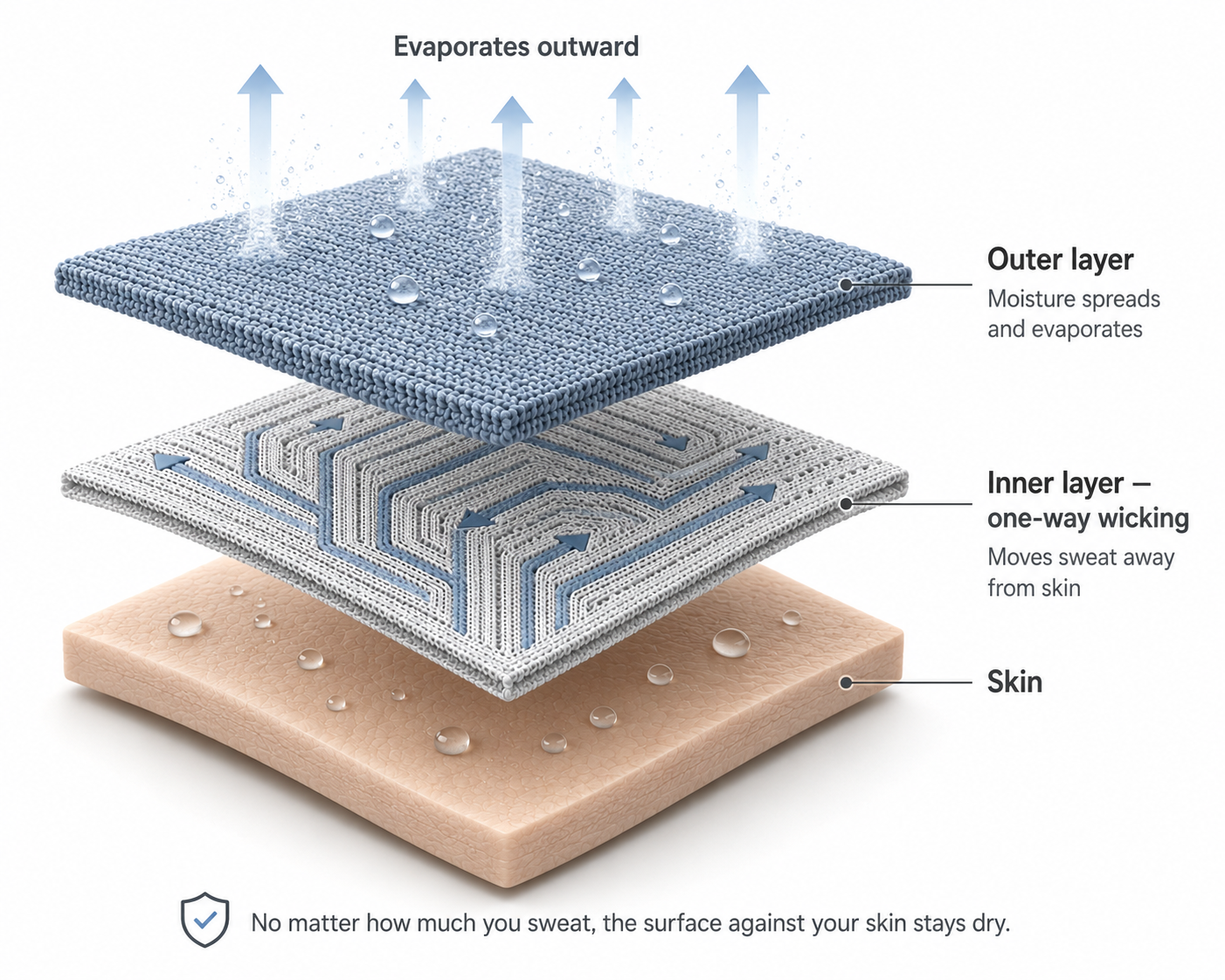
- A durable water-repellent (DWR) finish nearly eliminated wet friction in testing, and one-way wicking construction also reduced cling by pulling moisture off the skin-facing side.
- Standard moisture-management specs did not predict wet cling. It is driven by several factors at once, so a single number on a spec sheet is not enough to design around it.
Most people who train regularly have felt it: a shirt that starts light and breathable, then turns into a wet layer that sticks to the back and shoulders halfway through a workout. That sticking sensation has a name — wet cling — and until recently it was difficult to measure. Everyone could feel the difference between a fabric that clings and one that stays comfortable, but there was no direct way to put a number on it.
A 2023 study from the Textile Protection and Comfort Center at NC State University changed that. The researchers built a method to quantify wet cling directly, and the results are useful for anyone specifying fabric for performance apparel.
What Wet Cling Actually Is
When you sweat, a thin film of moisture forms between your skin and the fabric touching it. That film changes how the two surfaces interact. Instead of sliding freely, the fabric drags against the skin, which registers as clinging and, over time, can cause friction discomfort or chafing at high-contact areas.
The problem for developers has always been that cling is a sensation. It is easy to describe and hard to measure. The NC State team addressed this by building a wet cling tester that uses a sweating skin simulant — an artificial surface that releases moisture the way skin does. The fabric slides against this wet surface under controlled conditions, and the device measures the friction force generated. That converts a vague complaint into a repeatable number, which means fabrics can finally be compared on this property directly.
What the Testing Showed
Several findings from the study are relevant to how a performance knit is chosen and constructed.
First, wet cling is not fixed. It depends on conditions. Sweat rate, how long the sweating continues, and air movement around the body all affect how much wet friction builds up at the fabric-skin interface. A fabric that feels fine on a cool, breezy day can behave differently during heavy sweating in still air.
Second, fiber and construction matter more than most people assume:
| Fabric type | Relative wet cling | Why |
|---|---|---|
| Thin polyester single jersey | Lowest | Wicks, spreads, and dries quickly, so little moisture sits at the skin |
| Thicker polyester double knit | Low | Higher absorption capacity pulls moisture away from the interface |
| Cotton knit (comparable thickness) | Higher | Retains moisture readily, keeping the skin surface wet longer |
Thin, fast-drying polyester single jersey showed the lowest wet cling of the fabrics tested. Thicker double-knit polyester also performed well, because its greater absorption capacity draws moisture off the skin-facing surface and reduces buildup right where cling happens. Cotton knits, by contrast, clung more than polyester of comparable thickness, because cotton holds onto moisture instead of moving it.
Third, two engineering approaches stood out for reducing cling:
- Durable water-repellent (DWR) finish. Fabrics treated with DWR showed almost no wet friction at all. Because the finish resists moisture at the surface, the film that causes cling does not form the same way.
- One-way wicking construction. Fabrics engineered to move moisture away from the skin-facing side — pushing it toward the outer surface — also reduced cling by keeping the interface drier.
The Finding That Matters Most for Specs
The most useful result for anyone writing a fabric specification is also the least intuitive. The standard moisture-management metrics that brands routinely quote did not statistically correlate with wet cling.
In other words, the usual spec-sheet numbers do not, on their own, predict how clingy a fabric will feel when someone sweats in it. Wet cling comes from several factors acting together — fiber content, knit structure, thickness, absorption behavior, and finish — so it cannot be reduced to a single existing measurement. A fabric can score well on a familiar moisture-management test and still cling more than expected.
For product development, the practical takeaway is that low-cling performance has to be designed in through construction and finishing decisions, not assumed from a standard rating.
How FJORATEX Can Support This
FJORATEX has not run this specific test, and this research reflects lab work by NC State, not FJORATEX's own fabrics. What the study does is inform how we think about the structural choices that influence wet comfort.
Our development experience is in moisture-management knit constructions — polyester and blended single and double knits, and finishing choices such as water-repellent treatments and directional wicking. Those are exactly the variables this research points to as relevant to reduced wet cling. When a brief calls for a fabric that stays comfortable during heavy sweating, we can work through fiber, knit structure, and finish options with those trade-offs in mind, and specify test methods on the actual candidate fabrics rather than relying on a single standard spec.
Research source: Gao, Deaton, and Barker, "A Novel Method for Measuring the Wet Cling Properties of Textiles," Fibers and Polymers, 2023.
Next Step
Ready to develop your next fabric?
Share your brief and we'll respond within one business day to discuss technical fit, timing, and next steps.
Initiate a Project