Which Fabrics Should You Sample Together for Performance Underwear?
November 27, 2026
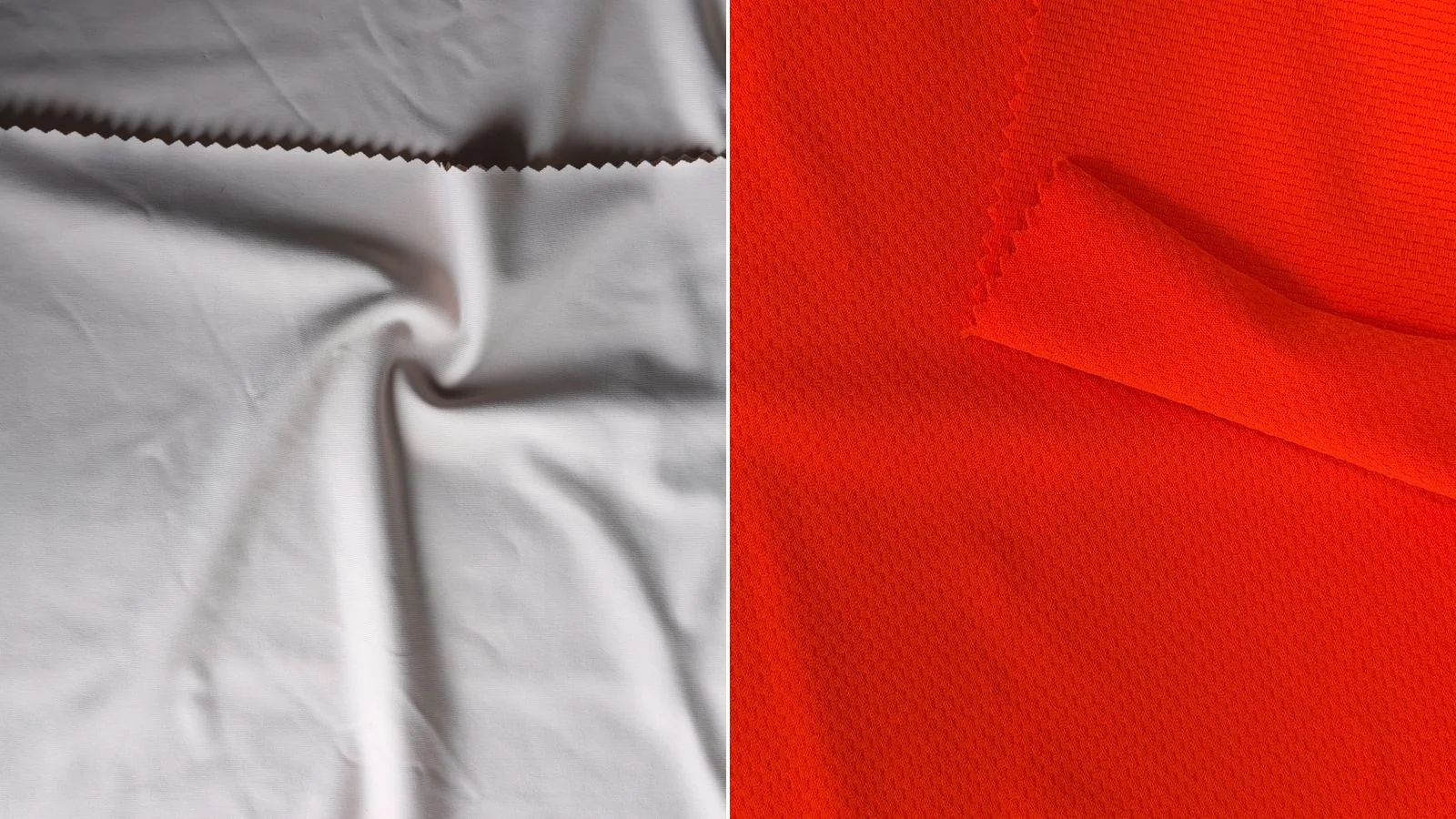
Two FJORATEX swatches photographed separately. Left, YT24036 jersey. Right, YT24090 mesh.
A boxer brief can feel soft across the seat and still pull at the crotch when the wearer takes a long stride. The body and gusset share a seam. As the wearer moves, each piece has to follow the other along that edge. How far they stretch, how much effort that takes and how they settle afterwards all matter.
For a cut-and-sew training brief, start with one body jersey, enough of it to cut a matching gusset, one alternative lining, one mesh and the waistband elastic you intend to use. That gives the sample room a baseline and lets you change one part at a time.
What goes in the first sample request?
Body. Try a cutting of FJORATEX YT24036, a 190 g/m² single jersey in 85% nylon and 15% spandex. Mark the direction that will run around the hips. Compare the pull across the body and along it. Feel both faces and decide which goes next to skin. YT24036 fabric card
Gusset and lining. Cut the crotch gusset from the body jersey first. For a lined design, make two versions with the same shape. Line one with the body jersey and the other with YT24001, a lighter 150 g/m² jersey in 87% polyester and 13% spandex. Fold each where the gusset meets the inner leg. Feel the ridge and see whether the two layers lie flat. YT24001 fabric card
Mesh insert. Try YT24090, a 160 g/m² mesh in 88% polyester and 12% spandex, at the proposed vent position. Stretch it in the intended cut direction over a contrasting background. Does it reveal more than the design allows? If the design puts a lining behind the mesh, check airflow through both layers together. YT24090 fabric card
Waistband. Request the actual trim from the elastic supplier, in the intended width and with the proposed logo and back join. Feel the skin side, edges and join. Stretch a loop over the hips, then try it attached to the jersey. The band needs enough pull to stay up and enough give for sitting.
The three fabric cards identify the knits, fibre blends and weights. Selecting a pairing for its recovery, ventilation or drying time takes measurements on the chosen materials.
Why can two comfortable swatches make a rippled seam?
Imagine stretching the long edge of a mesh insert to match a mark on the body jersey. Both fabrics reach the mark, but one takes a firmer pull. Once sewn, that firmer strip can act like a tight cord along the edge. If the mesh grows during wear and the jersey springs back, the mesh can stand away from the body between the seams. A single hand stretch can miss both problems.
Ask the sample room for two short joins following the actual panel directions. Use jersey against jersey for the first and jersey against mesh for the second. Keep the seam, stitch and thread the same. Mark equal lengths before sewing and retain loose cuttings from both fabrics.
- Wavy straight off the machine? Compare the marks on each side of the seam. Ask the machinist to check whether one ply was stretched or fed faster, and whether the thread draws the join tight. Uneven feed and excessive thread tension can both produce puckering. Coats technical bulletin on seam puckering
- Flat at first, loose after movement? Extend each join repeatedly to the same marked length. Let both rest for the same time, then lay them flat without smoothing. Record which edge has grown and whether the seam itself restricts the pull.
- Flat until the first wash? Wash and dry the marked loose cuttings and the joined pieces together using the proposed care instructions. If one loose piece shortens more in the seam direction, the longer piece may buckle once the two are joined.
For comparable lab figures, specify the cut direction, the extension of interest and when recovery is measured. ISO provides separate methods for fabric strips and for narrow fabrics such as waistband elastic. ISO 20932-1 for fabric strips · ISO 20932-3 for narrow fabrics
What can you decide only on the boxer brief?
Have the same wearer try the same size under the intended training shorts. Walk, take a long stride, then sit and bend forward. Ask the wearer to point to the first place they feel pressure. At the crotch, check whether the gusset edge rubs the inner leg. If the design also has a shaped front pouch, look separately for a seam pulled off centre or a fold that presses into the skin.
At the waist, mark the band position before movement. Check whether it rolls when seated, rides down on standing or leaves the jersey gathered below one spot. Record the relaxed elastic length and the body opening it was sewn to. A change in that ratio can change the fit even when the elastic supplier sends the same trim.
Repeat the fitting after the agreed wash and dry cycle. Keep the approved sample with the fabric codes, cut directions, gusset layer order and waistband length. Those details give the garment maker a way to reproduce the combination the wearer actually tried.
Next Step
Ready to develop your next fabric?
Share your reference or requirements. We can discuss fabric options and how to take the project forward.
Get in touch