Why Does Wool Shrink in the Wash, and Can You Reshape It?
November 20, 2026
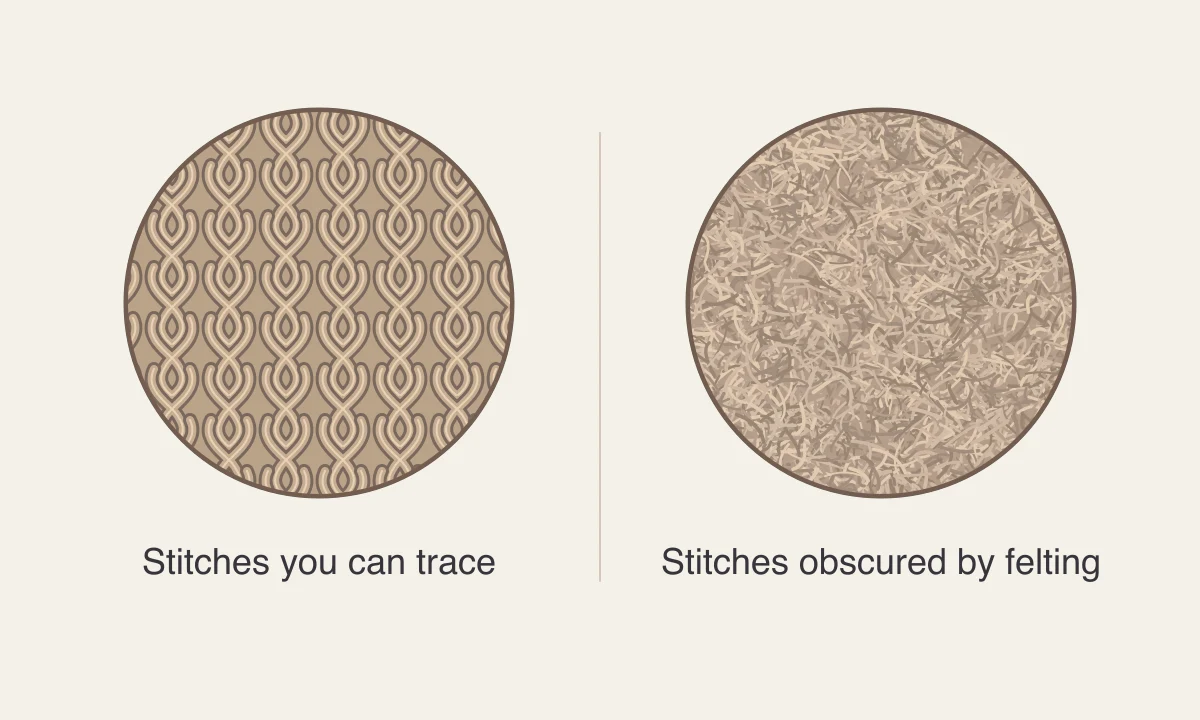
Look at the stitches as well as the sleeve length. These drawings illustrate how felting can obscure the knit structure.
Your cuffs sit higher after a wash. Before pulling at the sleeves, lay the sweater down and look at the stitches. If a wool sweater comes out of the wash with a curled cuff or an uneven hem but the knit still feels supple, gently reshape it while damp and dry it flat, following its care label. A sweater that has severely felted stays dense. Stretching won’t bring back its original size or feel. Woolmark on drying and reshaping
Why does a wool sweater come out smaller?
If the knit was stretched during knitting or finishing, the stitches can relax when washed and the sweater can change size. Wet wool can also felt. As the fibres rub against each other, their surface scales help them interlock and the knit draws together. Either change can leave a shorter sleeve, but the fabric can feel quite different. Woolmark processing guide, p. 200
Can you tell whether a sweater has felted?
Lay the sleeves side by side and look at a patch that gets little wear. If you can trace the individual stitches and the fabric opens out easily, smooth any curled edges and measure again once dry. Blurred stitches and a thicker, stiffer fabric point towards felting. Sleeve length alone tells you little about which change you’re seeing.
How do you reshape a curled cuff or a bump at the shoulder?
If the care label allows washing, lay the damp sweater on a clean, pale, lint-free towel and ease the cuffs and hem into shape. For a shoulder bump left by a hanger, Woolmark suggests dipping just the misshapen area in warm water (30–40°C) and working it gently by hand. Stay within the temperature on the garment’s label. Dry flat, away from direct sun and radiators, and measure the sleeve once it’s dry. Woolmark flat-drying and reshaping guide
Why can one wool sweater go in the machine while another needs hand washing?
The fibre label tells you what the sweater contains. The care label tells you how the finished garment can be washed. Some wool receives a shrink-resistant treatment that limits how readily the fibres interlock. Read the washing and drying instructions separately. Use the specified wash cycle and tumble dry only when the label allows it, on the indicated setting. Two Merino sweaters can carry different instructions. Machine-washable wool · Tumble drying wool
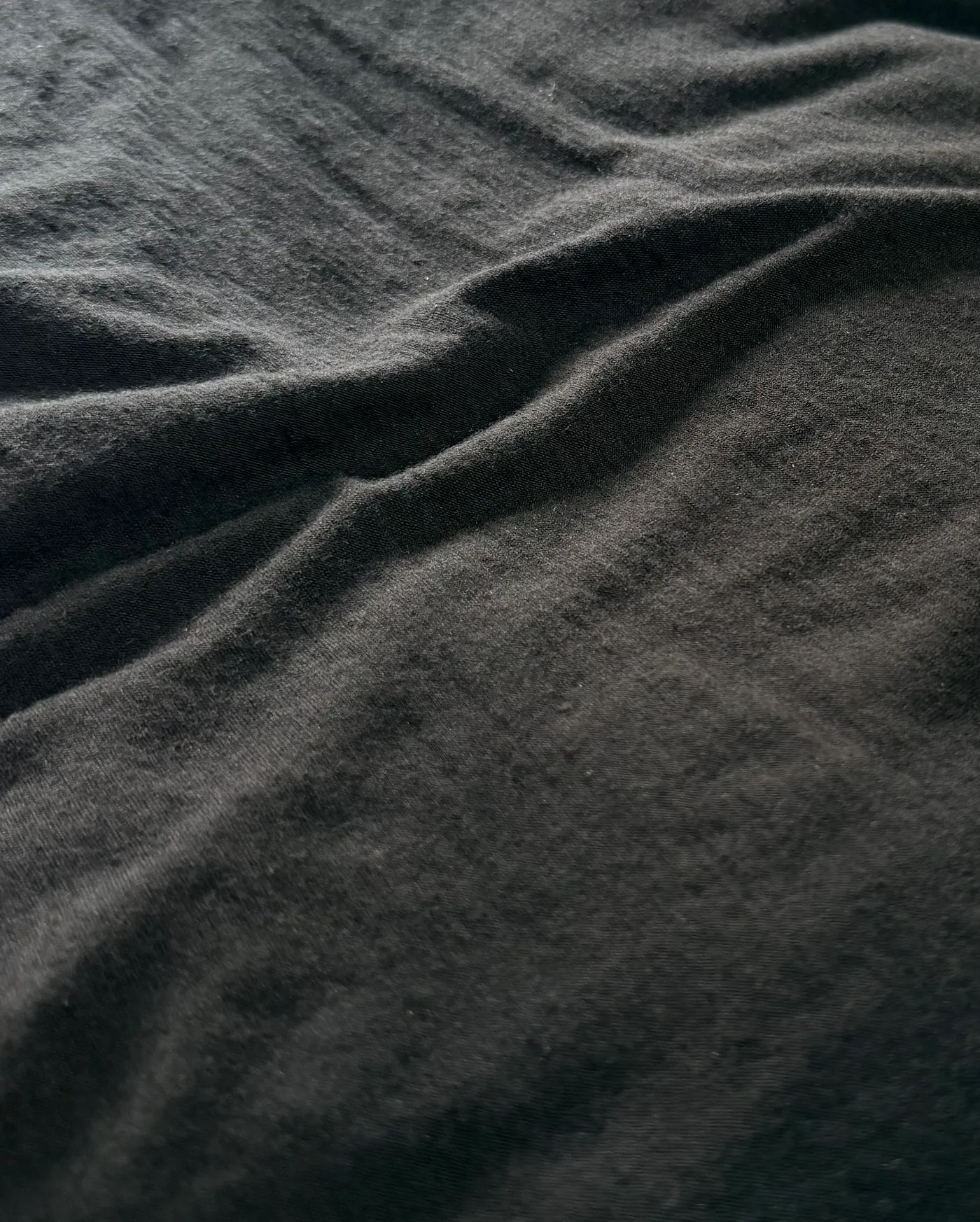
One card in our FJORATEX fabric library shows why we look at both directions. It’s a 145 g/m² single jersey made with a core-spun yarn, 87% wool and 13% nylon. On this fabric sample, the recorded shrinkage was within 5% in both length and width. FJORATEX wool-nylon sample card
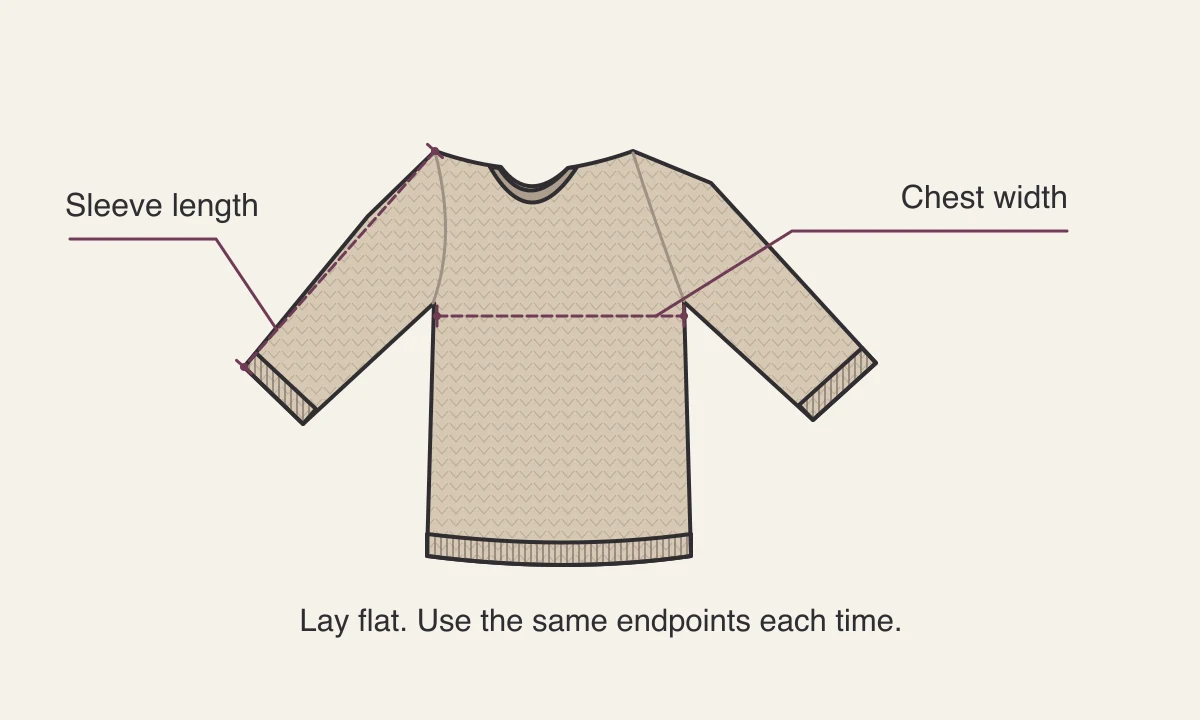
If you only noticed the shorter sleeves after the wash, let the sweater dry flat and try it on. Has a cuff just rolled up, or does the chest feel tighter too? If you’re worried it might shrink again, we’d measure the sleeve length and chest width now, with the dry sweater laid flat. Snap a photo of where the tape sits so you can measure the same spots after the next wash, once the sweater is dry. Guide to knit shrinkage and spirality