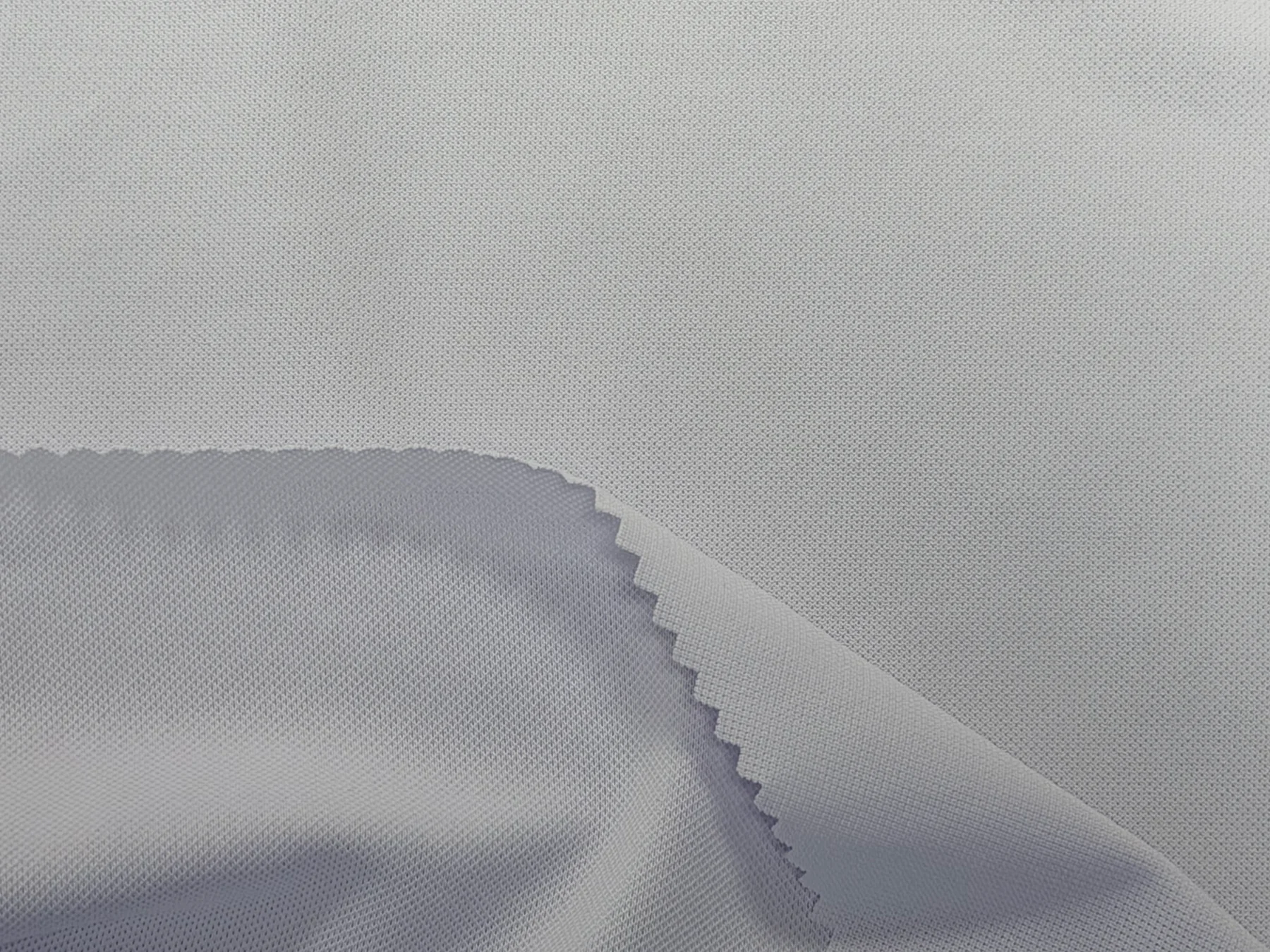
Original photograph of FJORATEX matte polyester-spandex piqué, a knit fabric for polo shirts and casual sports tops.
Some gym tops still smell around the underarms after they have been washed and dried. The laundry is done, but the smell is still there. Is something going wrong in the wash, or does the fabric itself tend to hold on to odour?
Gym clothes can still smell after washing because some odour compounds remain in the fabric. How those compounds interact with fibres affects both their retention and their release into the air. Understanding persistent odour therefore means looking at wear and washing conditions as well as any antibacterial treatment.
Highlights
- Washing may leave some odour compounds behind. Residues can build up through repeated wear and washing.
- Fibres affect how odour compounds are retained and released. The amount held in a fabric and what we actually smell are different measures.
- Antibacterial activity and odour reduction need separate assessment. An antibacterial test result does not describe how clothing smells after wear, storage or washing.
Does sweat odour always develop on the clothing?
Not always. Some odour compounds form on the skin and then transfer to clothing with sweat. The fabric can pick up water, microbes and compounds that already have a smell.
As University of Alberta textile researcher Rachel McQueen explains, once odour compounds enter clothing, their interaction with the fibres becomes part of the odour problem too. University of Alberta research overview.
Why doesn't washing remove all the odour?
Different odour compounds interact with fibres in different ways, which can affect how easily they wash out.
A 2020 study compared the residues of three selected odour compounds in cotton and polyester knitted fabrics after laundering. In each cycle, the researchers applied the compounds again before washing the samples.
Under the study's washing conditions, the compounds were more easily removed from cotton. Residues accumulated between one and five cycles, but did not increase significantly between five and ten. Abdul-Bari et al., Textile Research Journal, 2020.
How do fibres affect the release of odour?
Alongside how much washing removes, it is worth looking at what happens to the compounds that remain in the fabric.
In a 2024 study, researchers immersed yarn bundles made from six fibre types in synthetic sweat containing selected odour compounds. They measured the release of these compounds at 30 minutes, three hours and 24 hours, and found that the differences between fibres changed over time. McQueen et al., Textile Research Journal, 2024.
For product development, when you assess odour matters: straight after exercise, after the clothing has been left for a while, or after washing and drying. If a brand is concerned about lingering odour after repeated wear and washing, its evaluation needs to include that stage of use.
Why assess odour separately if a fabric has an antibacterial treatment?
An antibacterial treatment targets bacteria. Reducing bacterial numbers does not automatically remove odour compounds that have already formed and remain in the fabric. When discussing odour control, it helps to be clear about the aim: reducing odour formation, reducing the compounds retained in the fabric, or changing their release into the air.
The testing standards address different questions too. ISO 20743:2021 sets out quantitative methods for determining the antibacterial activity of textiles. ISO 17299-1:2014 covers the general principles of deodorant textiles and related testing. An odour evaluation also needs a specified method and target odour compounds. ISO 20743 scope; ISO 17299-1 scope.
When you receive an antibacterial report, check whether it answers the question that matters for the product. Activity against specified bacteria and less noticeable odour after wear and washing are different outcomes.
What should brands ask when choosing activewear fabrics?
A brief that asks for “odour resistance” becomes much more useful when it answers three questions.
- When should the clothing smell better? Straight after exercise, after a full day of wear, or once it has been washed and dried? Define the use case first, then choose how to assess it.
- What stage of production has the sample reached? Check whether the fabric has received the planned dyeing and finishing treatments. To understand how it performs during wear, consider a wear trial with finished garments.
- How does it perform after the agreed washing routine? Agree on the washing method, number of cycles and drying conditions alongside the product's care instructions, then compare results under consistent conditions.
When reading a report, also check whether the results come from chemical analysis, bacterial counts or people assessing the smell. These methods provide different information. Our guide to reading a knit fabric test report explains what to look for.
When discussing activewear knit fabric development with FJORATEX, include the intended use, washing habits and the odour issue you want to improve. A brief such as “less lingering odour around the underarms after repeated wear and washing” gives development and testing a clearer shared aim than simply asking for an antibacterial fabric.
Next Step
Ready to develop your next fabric?
Share your reference or requirements. We can discuss fabric options and how to take the project forward.
Get in touch