Nylon-Spandex vs. Polyester-Spandex: How to Choose the Right Stretch Fabric for Performance Apparel
June 21, 2026
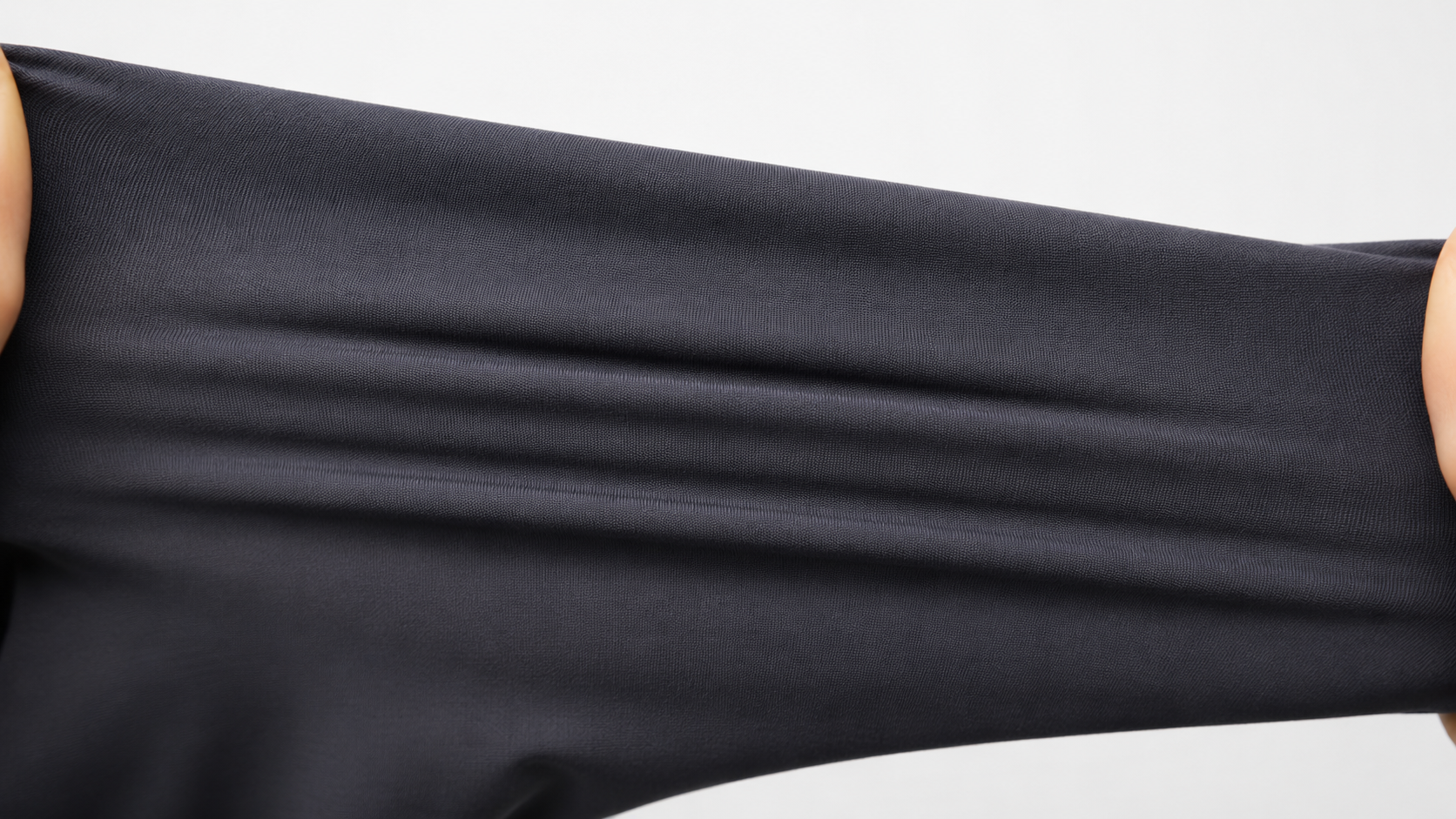
Nylon-spandex and polyester-spandex are the two dominant stretch fabric constructions in performance activewear. Both combine a primary synthetic fiber with a small percentage of elastane (spandex) to achieve four-way stretch and elastic recovery. Both appear across leggings, sports bras, running gear, training tops, and golf wear. At a surface level, they look similar on a spec sheet. In practice, they differ in ways that matter enough to affect product positioning, buyer perception, and end-use performance.
This comparison is intended for brands selecting a base fabric for a new performance category, or sourcing teams re-evaluating an existing specification.
The Same Basic Architecture, Different Fiber Character
Both constructions share a similar compositional structure: a primary fiber at 80–92% combined with spandex (elastane) at 8–20%. The spandex component provides elastic stretch and recovery — without it, neither nylon nor polyester would have the four-way stretch required for close-fit activewear. The spandex percentage can be adjusted to tune the stretch range and recovery behavior.
The meaningful differences come from the primary fiber:
Nylon (polyamide): a synthetic fiber with a naturally smooth, dense molecular structure. It is softer to the touch than polyester at equivalent yarn counts, has higher intrinsic abrasion resistance, and holds stretch recovery well over time.
Polyester: the most widely produced synthetic fiber globally. It has a higher surface hydrophobicity than nylon — moisture moves across the fiber surface rather than absorbing into the fiber — which makes it more effective at rapid moisture transfer and faster drying. Color retention under UV exposure and repeated washing is also superior to nylon.
Neither is universally better. The right choice depends on the performance priorities, price positioning, and end-use environment of the specific product.
Where the Differences Show Up in Use
Hand Feel and Next-to-Skin Comfort
Nylon-spandex consistently registers as softer against skin in direct comparison. The fiber structure produces a more fluid, second-skin feel — relevant in garments worn in direct contact with the body for extended periods: yoga pants, close-fit leggings, fitted base layers, sports bras.
Polyester-spandex can approach nylon's softness at finer yarn counts and higher gauges (36G–40G), but requires more investment in yarn quality and construction to reach comparable results. At standard construction specs (28G–32G, standard polyester yarn), the difference in surface feel is perceptible.
For premium activewear positioning where the perceived quality of the hand is part of the value proposition, nylon-spandex typically supports that better.
Moisture Management and Drying Speed
Polyester is more effective for rapid moisture removal. Its hydrophobic fiber surface does not absorb moisture — instead, it moves sweat laterally across the fabric face via capillary action and exposes it to the outer surface for evaporation. This mechanism works efficiently during high-sweat, high-intensity activity.
Nylon absorbs slightly more moisture than polyester, which means it may feel marginally damp during very heavy sweating or in extreme heat and humidity. In lower-to-moderate sweat conditions — yoga, studio training, golf — the difference is minimal. In sustained outdoor running, team sports in warm climates, or high-intensity training sessions, the polyester advantage in drying speed is relevant.
Moisture-wicking finishing treatments can be applied to both constructions, but polyester responds better to these treatments and tends to retain them longer through laundering.
Stretch Recovery
Nylon-spandex generally provides slightly better elastic recovery — the speed and completeness with which the fabric returns to its original dimensions after being stretched. For compression-adjacent garments (leggings, training tights, fitted shorts) where the fabric's ability to hold its shape across a session and across a product's life matters, nylon-spandex tends to perform more consistently.
Recovery behavior also affects how a garment fits after multiple washes. Nylon-spandex constructions are somewhat more resistant to the gradual reduction in stretch recovery that occurs as a garment ages.
Pilling and Abrasion Resistance
Nylon has higher intrinsic abrasion resistance than polyester. Under repeated friction — the inner thigh of leggings, the underarm of a sports bra, the waistband against skin — nylon-spandex garments are slower to develop pilling and surface wear. This is a relevant consideration for high-wear, close-contact garments that need to maintain their surface appearance over 12–24 months of regular use.
Polyester is not abrasion-deficient, but it does pill more readily than nylon under equivalent friction conditions.
Color Fastness and UV Resistance
Polyester holds dye more stably. It is more resistant to fading under UV exposure and maintains color intensity through repeated machine washing more reliably than nylon. For garments with complex sublimation printing, bold colorways, or extended outdoor use, polyester's color retention is a practical advantage.
Nylon accepts dye well but requires more careful finishing to achieve equivalent wash fastness and UV stability.
Cost
Nylon-spandex fabric is typically priced 15–30% above comparable polyester-spandex constructions at equivalent GSM and gauge. The premium reflects both the raw material cost of nylon fiber and the established positioning of nylon-dominant fabrics in the mid-to-premium tier of the activewear market. For budget-positioned activewear lines, polyester-spandex is the standard choice.
Matching Fabric Direction to End Use
| Product Category | Typical Direction | Primary Reason |
|---|---|---|
| Yoga pants / leggings | Nylon-spandex | Soft hand, elastic recovery, skin-feel priority |
| Running shorts and tops | Polyester-spandex | Moisture wicking speed, fast drying, UV resistance |
| Sports bras | Depends on tier | Premium: nylon for softness; performance: poly for wicking |
| Golf polos and shorts | Polyester-spandex | Color retention, UV stability, dimensional stability |
| Studio and Pilates wear | Nylon-spandex | Close-to-skin comfort in lower-sweat conditions |
| Outdoor activewear | Polyester-spandex | Weather performance, color durability |
| Budget activewear lines | Polyester-spandex | Cost efficiency with adequate performance |
| Mid-to-premium activewear | Nylon-spandex | Hand quality supports price positioning |
Key Specifications to Establish Before Sampling
When working with a fabric supplier on stretch construction development, the following parameters should be confirmed before sampling begins:
- Fiber ratio: e.g., 80% nylon / 20% spandex, or 88% polyester / 12% spandex
- GSM target: most performance stretch fabrics run 150–250 GSM
- Stretch and recovery: 4-way stretch is standard; minimum 80% stretch recovery after 30 minutes is a common requirement for leggings and close-fit garments
- Knitting gauge: 28G–36G is standard for smooth performance knits; 40G for the finest constructions
- Fabric construction: single jersey is most common; interlock for more structured garments
- Surface finish: standard, matte, or brushed — affects hand feel and appearance
- Certification requirements: OEKO-TEX STANDARD 100 for chemical safety; GRS (Global Recycled Standard) if recycled fiber content is required
A note on recycled fiber: both recycled nylon (ECONYL is the most common branded source) and recycled polyester (rPET, often sourced from post-consumer plastic bottles) are available and increasingly specified by brands with sustainability commitments. Recycled constructions perform comparably to virgin fiber equivalents in most applications, though specific performance properties should always be confirmed at the sample stage.
Nylon-Polyester Hybrid Constructions
A third direction worth noting: some performance fabrics blend nylon and polyester in the primary fiber alongside spandex — for example, 50% nylon / 38% polyester / 12% spandex. These constructions aim to capture the softness and recovery of nylon while retaining the wicking speed and color stability of polyester at a cost point between pure nylon and pure polyester constructions. They are particularly common in sports bras and training tops where both comfort and moisture management matter.
How FJORATEX Can Support This
FJORATEX works with both nylon-spandex and polyester-spandex knit fabrics across a range of activewear applications. If you have a brief that specifies a stretch fabric direction — or if you are still evaluating which construction fits your product — we can provide samples and a development assessment aligned to your end use and price positioning.
Share your project via the contact form.