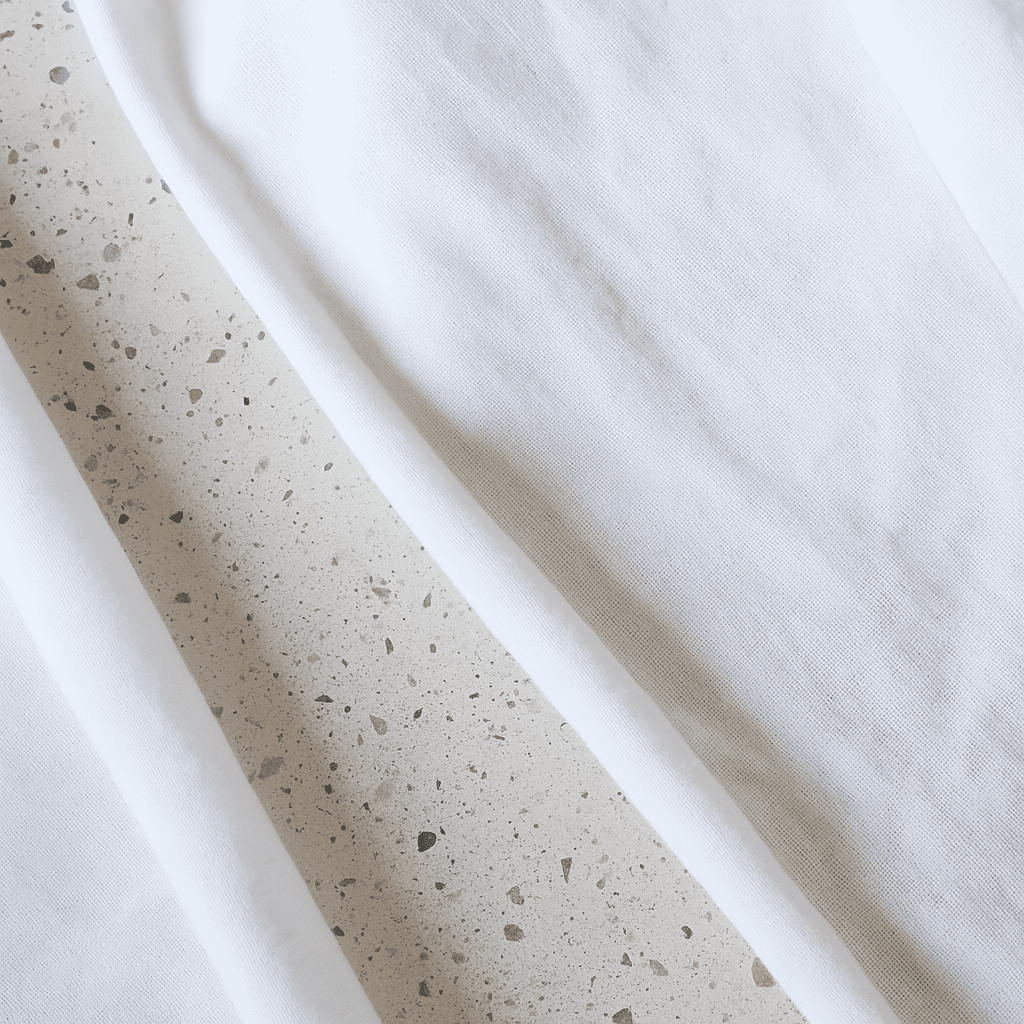
Years ago, I faced one of the earliest technical challenges in fabric development: curling. The kind that makes edges roll into tubes before you can even lay the fabric flat. The culprit? A single jersey knit — soft, stretchy, and great to wear, but impossible to handle off the roll.
Back then, we were still building experience. We didn’t realize that this behavior was entirely expected for this kind of fabric. Jersey, being a single-face knit with asymmetric tension between front and back, naturally curls at the edges. It’s not a defect — it’s a structural outcome.
Still, for production and sewing purposes, excessive curling is a hassle. So we worked through solutions. First, we tested minor edge structure modifications during knitting. Then, we fine-tuned the heat-setting process during finishing to balance fiber tension. For some use cases, we also introduced gentle edge pressing or anti-curling coatings to improve stability.
These practices have since become part of our routine. We now identify edge behavior early in sampling and tailor the solution depending on yarn type, fabric weight, and intended use.
This week, a friend asked me how we handle curling now. It reminded me how far we’ve come — and how important it is to document the little technical details that shape a fabric’s final form. After all, good materials don’t just come from innovation; they come from learning the hard way.